
Forest Beach Chatham MA Conservation Area: Full Guide
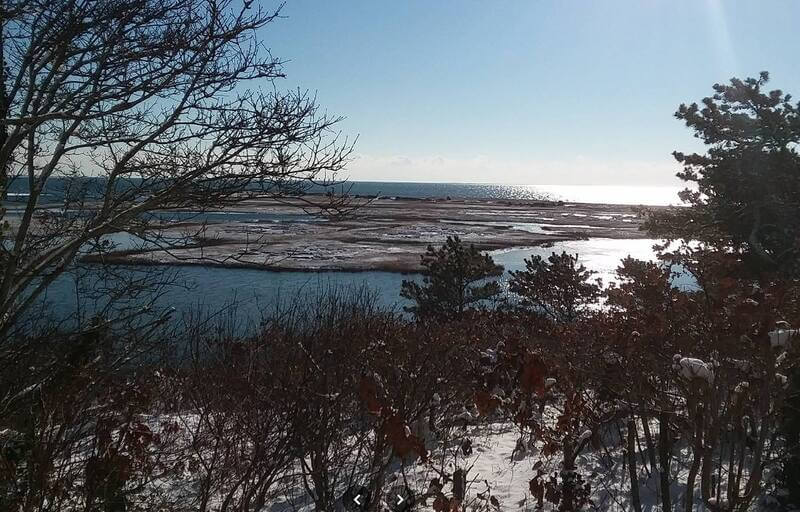
Forest Beach Conservation Area is a quiet stretch of protected coastline in South Chatham where you can walk a short loop, watch birds along a tidal salt marsh, and stand on a beach that most summer visitors never find. It is free to visit, open year-round, and compact enough to explore in under an hour without feeling rushed.
What sets this preserve apart from other South Chatham destinations is its combination of accessible coastal nature and an unusual piece of local history. The concrete tower footings still visible in the marsh mark what was once one of the most powerful ship-to-shore radio transmitting sites on the East Coast.
This is not a full-service beach with lifeguards and food trucks. It is a conservation area with a specific character: calm, walkable, historically layered, and ecologically rich.
Quick Facts About Forest Beach Conservation Area
Forest Beach Conservation Area sits in South Chatham on the shore of Nantucket Sound. It covers 74 acres of protected land managed by the Town of Chatham as part of approximately 1,000 acres of conservation open space the town maintains.
The main trail is a 1.1-mile loop with almost no elevation gain, rated easy and typically completed in 20 to 30 minutes, though birders and families with young children often take longer. Parking is free, year-round, and requires no town sticker or reservation. There are no restrooms, no food vendors, and no lifeguard coverage anywhere on the property.
The area is best for visitors who want a short coastal walk, wildlife observation, a quiet off-the-radar beach, or a look at a piece of Chatham's maritime radio history. It is not a suitable replacement for Chatham's main family beaches if amenities are a priority.
Where Is Forest Beach Conservation Area?
Forest Beach Road runs south from Route 28 in South Chatham and dead-ends at the beach parking lot. That lot is the primary access point for both the beach and the conservation area trails. GPS navigation using "Forest Beach Road, South Chatham, MA" reliably brings visitors to the correct location.
Parking is free and available on a first-come basis. On warm summer weekends the small lot fills quickly, and arriving before 9:00 a.m. is the most reliable way to secure a space.
Two additional viewpoints offer access without using the main parking lot. The Bayview Road overlook connects via a short trail to the site of the former radio transmission towers. Benches there face the marsh, the sound, and the distant outline of Monomoy Island. Informational signs at the overlook describe the site's history and identify wildlife visible from that point.
The end of Mill Creek Road provides a closer view of the tidal inlet and the rock jetty at the entrance to the marsh channel. Both spots work well for birders who want a different vantage point without walking the full loop.
What to Expect When You Visit
The main loop at Forest Beach Conservation Area begins at the parking lot and gives visitors two parallel route options. One follows the beach itself east toward Mill Creek inlet. The other runs along the marsh edge through coastal scrub vegetation. Both routes reconnect at the inlet's rock jetty, where the marsh channel meets Nantucket Sound.
The marsh-side trail is where most of the wildlife activity happens. Great Blue Herons, egrets, ospreys, and shorebirds concentrate along the tidal edges, especially at low tide. The trail runs through dense coastal shrubs where poison ivy grows heavily on both sides. Long pants are strongly recommended regardless of season, and ticks are active on this path from spring through early winter.
At the inlet, the two trails meet at a rock jetty extending into the water. Terns, gulls, sandpipers, and herons use the rocks as a roost. The exposed tidal flats of the marsh channel draw feeding shorebirds in numbers when the tide is falling or already low, making this the most productive observation point on the loop.
Is Forest Beach Better for Walking, Beach Time, or Bird Watching?
All three are available here, but in different proportions.
The beach section is calm and shallow, with warm Nantucket Sound water by midsummer. It works well for a short, low-key swim or a morning walk. Piping Plovers nest on the dune and upper beach sections each spring, and roped-off closures protect nesting territory from late April through mid-summer. Disturbing nesting Piping Plovers is a federal offense under the Endangered Species Act, and visitors must stay outside any marked closures.
Bird watching is the area's strongest draw. The combination of beach, tidal inlet, salt marsh, and coastal scrub in one compact location produces a wider range of species than most single-habitat sites nearby. Nesting species include Osprey, Piping Plover, Least Tern, Willet, and Saltmarsh Sparrow. Wading birds regularly present include Great Blue Heron, Great Egret, Snowy Egret, and Glossy Ibis.
Fall migration from late August through October brings the highest species diversity, with Marbled Godwit, Western Willet, Dowitchers, and Whimbrel reliably recorded at the inlet. The Cape Cod Bird Club runs organized birding walks at this location and regularly targets the marsh trail and overlook as the primary observation zones.
Walking the loop is what most visitors do first and return for. It is short, easy, and different in character depending on the tide, season, and time of day.
Parking, Access, and Visitor Tips
Beyond getting to Forest Beach Road, a few practical notes make the visit smoother.
- There are no restrooms anywhere on the property, including at the beach parking lot and at the Bayview Road overlook. Plan accordingly before leaving, especially with young children.
- Summer parking fills fast. The lot holds a limited number of vehicles, and the beach draws local residents, cottage-area families, and conservation-area visitors at the same time on warm weekends from late June through August. A weekday visit, an early morning start, or a shoulder-season trip eliminates this entirely.
- The Bayview Road overlook trail can become overgrown in summer. If visiting for the first time or if mobility is a concern, checking trail conditions in advance is worthwhile. The overlook itself is the most accessible viewpoint on the property for visitors who cannot walk the full loop. From the benches at the top, ospreys are visible on their nesting platforms in the marsh below without walking any further.
- Dogs are permitted on the conservation area trails year-round under Chatham leash laws. Leashes must not exceed six feet, and waste must be removed. The beach section follows the Town of Chatham's seasonal restriction: no dogs from May 1 through September 15. Outside that window dogs are allowed on the beach on leash. For the full breakdown of seasonal dog policies across all Chatham locations, the dog-friendly Chatham beaches guide covers rules, restricted zones, and off-leash areas in detail.
- Ticks are present throughout the conservation area from early April through late November. A full-body check after walking the marsh trail or the Bayview Road section is a consistent safety habit worth keeping during those months.
The WCC Radio History Behind This Site
The concrete piling bases visible in the marsh at Forest Beach Conservation Area are not leftover infrastructure. They are what remains of a 300-foot steel radio transmission tower that formed the transmitting half of RCA's Marine Communications Station WCC, a ship-to-shore coastal radio station that was the largest of its kind in the United States.
- The WCC transmitter was moved to this South Chatham site in 1948, replacing an earlier facility in Marion, Massachusetts. The receiving station remained in North Chatham, and together the two sites handled maritime radio communications across the Atlantic. At its peak, Chatham Radio/WCC served seafarers around the world twenty-four hours a day.
- The station handled communication for Richard Byrd's Antarctic expedition in 1928, transmitted weather information to Charles Lindbergh in 1933, and relayed safety traffic for commercial vessels across the seven seas for most of the twentieth century. WCC operated continuously from 1921 until it closed in July 1997, when satellite-based communication systems replaced traditional marine radiotelegraphy.
- After the station closed and the property changed hands, the Town of Chatham preserved the South Chatham transmitter site as open space. The four large concrete footings in the marsh, visible from the Bayview Road overlook, are all that remains of the tower. A nearby plaque shows photographs of the marsh as it looked when covered with a web of antenna poles and wires.
- For the full story of WCC, the Marconi era in Chatham, and the original receiving station in North Chatham, the Marconi Museum in Chatham is the definitive local resource. The museum holds original transmitting equipment, period photographs, and exhibits covering the station's entire history from its Marconi-era origins through its final year of operation.
Forest Beach Conservation Area and the Marconi Museum together tell two chapters of the same story, and visiting both on the same day gives the clearest picture of what happened here.
The Ecology of the Salt Marsh at Forest Beach
The salt marsh bordering Forest Beach Conservation Area is more than a scenic backdrop. Research from NOAA shows that salt marshes remove carbon from the atmosphere at a rate roughly ten times greater than tropical forests and store three to five times more carbon per acre. The marsh at Forest Beach filters runoff before it reaches Nantucket Sound, buffers the coast from storm surge, and provides nursery habitat for juvenile fish and shellfish.
The marsh is dominated by cordgrass and common reed, with tidal channels threading through toward Mill Creek and the Nantucket Sound inlet. The upland section of the conservation area supports pitch pine, scrub oak, bearberry, and native coastal grasses. Prickly pear cactus grows in the drier sandy sections, a plant that surprises most visitors.
Marsh snails inhabit the low marsh zone, and their empty shells collect along the wrack line at the marsh edge. Earth star mushrooms appear in the open woods above the marsh during cooler months.
Multiple osprey nesting platforms installed in the marsh support active nests visible from the Bayview Road overlook from spring through early fall. Osprey pairs return to the same platforms each year, and their fishing dives into Mill Creek and the shallow sound waters are a consistent visual from the overlook and the inlet jetty.
Chatham's broader commitment to protecting land like this is part of what makes the town ecologically distinctive on Cape Cod. The conservation and preservation program in Chatham encompasses roughly 1,000 acres of protected open space town-wide, making the town one of the more aggressively preserved communities on the Cape relative to its size.
Best Time to Visit Forest Beach Conservation Area
The preserve has a distinct character in each season, and the best timing depends on what you want from the visit.
- Spring from April through May brings migrating shorebirds moving north through the salt marsh and inlet from late April into May. Ospreys return to the nesting platforms in the marsh. Piping Plover pairs begin establishing nesting territories on the beach. Trail vegetation is lower and easier to navigate than in summer. Ticks become active by mid-April, so checking carefully after each visit matters from this point forward.
- Summer from June through August is when nesting activity peaks on the beach and in the marsh. The overlook provides views of active osprey nests and, later in the season, fledging chicks. The beach draws more visitors on warm weekends, so early morning arrivals in this period offer calmer conditions and better photography light. Dogs are not permitted on the beach section during this period.
- Fall from September through November is the most productive window for bird watching at this location. Southbound shorebirds move through in August and September. Marbled Godwits and Western Willets are found at the inlet from late August onward. Double-crested Cormorants gather in large flocks in October and early November. Dogs return to the beach after September 15. The trails are less crowded and the marsh light in the late afternoon is exceptional.
- Winter from December through March is the quietest season. Common Loons are visible on the sound on calm days, alongside Buffleheads and Common Goldeneyes in the sheltered waters near the inlet. The marsh-side trail is passable but can be muddy after rain. This is the best season for solitude.
Checking Chatham weather by season before planning a trip helps match the visit to expected conditions, particularly for off-peak months.
What to Bring
No facilities exist at Forest Beach Conservation Area. Pack everything before leaving.
- Water is essential. There are no vending machines, no food vendors, and no facilities of any kind on the property. Bring enough for the full length of the visit and for any dogs in the group.
- Long pants protect against poison ivy on the marsh trail and against ticks throughout the conservation area. A full-body tick check after visiting the marsh-side path or the Bayview Road overlook section is a sensible habit from April through November.
- Binoculars improve the experience significantly for bird watching from the overlook and the inlet jetty. A low-tide chart for the Chatham area helps time shorebird observation near Mill Creek. NOAA tidal predictions for the Chatham tidal station are available free online and are worth checking before a birding visit.
- Closed-toe shoes work better on the conservation trails than sandals. The marsh trail has uneven ground and dense vegetation. Strollers with wider wheels manage the beach and parking lot well, though the marsh trail is too narrow and overgrown for most standard strollers. The overlook trail and the open beach section are the most accessible routes for visitors with limited mobility.
Nearby Places to Pair With Your Visit
Forest Beach Conservation Area sits in South Chatham with several other destinations within a short drive.
- Hardings Beach is the largest family beach on Nantucket Sound, about two miles west along Route 28. It has two parking lots, lifeguards, showers, and food trucks in season. A one-mile informal coastal trail from the west parking lot runs east toward Stage Harbor Lighthouse, offering a longer walk option for visitors who want more distance after finishing the Forest Beach loop.
- Cockle Cove Beach is the closest guarded South Chatham beach option for families who want lifeguard coverage and the calm shallow water that Nantucket Sound reliably provides.
- The Sylvan Gardens conservation area offers a different kind of Chatham conservation walk: inland, wooded, and sheltered in character compared with Forest Beach's open coastal setting. Pairing the two on the same day covers both habitat types and fills a morning without any overlap in experience.
- For those interested in longer routes, the guide to hiking on Cape Cod covers trails throughout the region that go well beyond what the Forest Beach loop provides, including multi-hour options for more serious walkers.
Conclusion
Forest Beach Conservation Area in South Chatham rewards visitors who arrive without a fixed agenda. Whether the goal is a short coastal walk, a focused morning of bird watching, a quiet beach visit away from the larger town spots, or a look at the concrete towers that once transmitted radio signals to ships in the middle of the Atlantic, this preserve offers something specific and unhurried that Chatham's busier destinations do not.
To plan your full time in Chatham, browse the Chatham Visitor Guidebooks for up-to-date seasonal maps and local recommendations, or contact the Chatham Chamber directly for guidance before you arrive.