
The Shipwrecks of Cape Cod: A History of Maritime Tragedies and Discoveries
Cape Cod, Massachusetts, has long been a place of beauty and danger for mariners. Its treacherous coastline and shifting sandbars have claimed thousands of ships over the centuries, earning it the ominous nickname "the ocean graveyard." From early colonial wrecks to notorious pirate ships and tragic maritime disasters, shipwrecks on Cape Cod tell the story of the region's perilous waters and anchor the broader shipwreck history of Cape Cod and the nautical history of Massachusetts.
Among the most famous Cape Cod shipwrecks are those that lie off the coast of Chatham, MA, where unpredictable storms, hidden shoals, and powerful currents have doomed many vessels. From Chatham, MA shipwrecks to those further along the Cape’s shores, these wrecks serve as eerie reminders of the sea’s unforgiving nature and the area’s Cape Cod maritime history.
From underwater discoveries to preserved wrecks in museums, the shipwrecks of Cape Cod continue to intrigue divers, historians, and beachgoers alike. Each sunken vessel adds to a deep and complex narrative tied to this rugged coastline and the legacy of lost ships in Massachusetts shipwreck history.
A Treacherous Coastline: Why Is Cape Cod So Dangerous?
Cape Cod juts into the Atlantic like a hooked arm, forming a natural obstacle for ships traveling between Boston and New York. Mariners must either navigate around the Cape’s dangerous shoals or risk grounding on the sandbars that shift unpredictably (classic sandbars and shoals hazards for coastal navigation hazards).
This geography, combined with the frequent nor’easters that batter the region, has led to more than 3,000 recorded shipwrecks over the past 300 years. Some ships were destroyed by coastal storms, while others ran aground due to poor navigation or mechanical failures. Many of these wrecks remain hidden beneath the shifting sands, occasionally reappearing after violent storms alter the coastline and accelerate coastal erosion on Cape Cod.
Cape Cod Target Ships and Modern-Day Wrecks
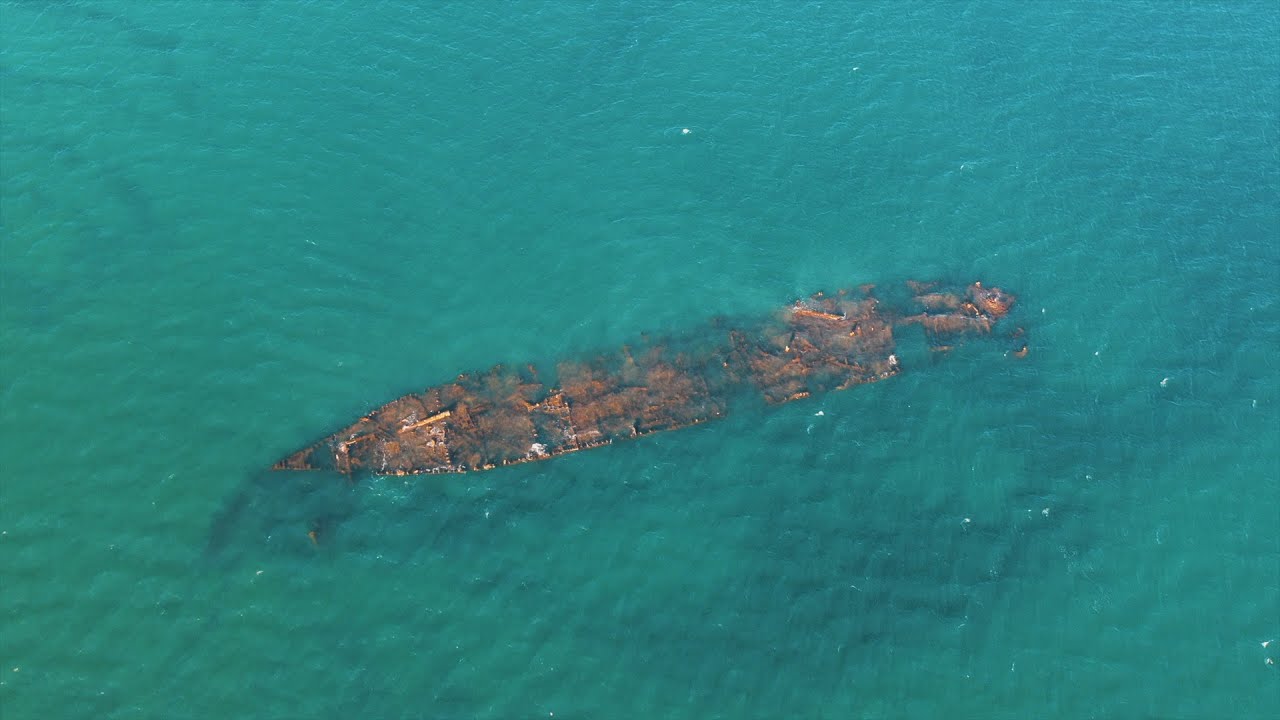
Not all shipwrecks on Cape Cod date back centuries. In Cape Cod Bay, one can still spot remnants of the target ship Cape Cod, a vessel once used for military bombing practice.
Now a decaying skeleton on the seafloor, this Cape Cod Bay target ship attracts curious divers and offers a haunting glimpse into Cold War history. Its remains contribute to a growing list of ship skeletons off Cape Cod, modern additions to the region’s long shipwreck legacy.
World War II losses near the Cape Cod Canal (Cape Cod, MA)
Cape Cod’s reputation as an “ocean graveyard” isn’t only about shoals, nor’easters, and centuries-old wrecks, it also includes a sharp, modern chapter from World War II. In early-to-mid 1942, German U-boats pushed operations close to the New England coast as part of the broader Battle of the Atlantic.
The Cape Cod Canal mattered strategically because it offered a sheltered inside route between Buzzards Bay and Cape Cod Bay, helping coastal convoys avoid the exposed trip around the Outer Cape. Naval planners saw the canal as a genuine wartime asset, so much so that one Navy history notes only seven ships were lost in the Cape Cod area during the entire war, with five losses concentrated in the January–July 1942 window, when the U-boat threat was most intense off the Northeast.
Other deadly WWII sinkings off Cape Cod (the broader “losses near the Canal” context)
Even when the canal itself wasn’t the immediate backdrop, the waters off Cape Cod’s approaches saw convoy actions with major loss of life:
- Convoy XB-25 attack (June 1942): German submarine U-87 attacked convoy XB-25 and sank the British freighter SS Port Nicholson and the American passenger/cargo ship SS Cherokee in the Cape Cod region.
Cherokee was particularly tragic, sources note 86 deaths in that sinking.
These losses are part of why WWII-era Cape Cod history often focuses on convoy routes, patrols, and coastal defenses rather than just classic shipwreck hazards.
Coastal defenses around the Canal
Cape Cod didn’t sit defenseless. The canal area was protected as a critical maritime corridor, including coastal artillery batteries, though Massachusetts’ canal history notes the artillery was never fired in defense of the canal. That detail is important for interpretation: the canal’s WWII story is less about dramatic gun battles at the shoreline and more about logistics, routing, and risk management under submarine threat.
Why this matters for a “Cape Cod shipwrecks” narrative
If you’re writing about “New England shipwrecks,” WWII losses near Cape Cod are a powerful reminder that the region’s wreck map includes industrial-age ships carrying wartime cargo and passengers, sunk within living memory. The Stephen R. Jones grounding inside the canal, followed by the Alexander Macomb disaster after rerouting, is a clean, compelling through-line that connects:
- Cape Cod’s geography (the need for the canal),
- wartime operational decisions (routing and convoy timing),
- and the human cost (lost crews and passengers).
Famous Shipwrecks on Cape Cod
1. The Whydah Gally: The Only Authenticated Pirate Ship
One of the most legendary Cape Cod shipwrecks is that of the Whydah Gally, which sank off the coast of Wellfleet in April 1717. Originally built as a slave ship, the Whydah was captured by pirate Captain Samuel "Black Sam" Bellamy, who used it to raid merchant vessels in the Caribbean.
After amassing a fortune from plundering over 50 ships, Bellamy and his crew sailed north, only to be caught in a violent nor’easter. The Whydah was dashed against the sandbars and sank, taking with it most of its crew and an enormous treasure rumored to contain gold, silver, and jewels.
For centuries, treasure hunters sought the pirate shipwreck. In 1984, underwater explorer Barry Clifford discovered the wreck, making it the only authenticated pirate shipwreck found, one of the most talked-about pirate shipwrecks Cape Cod stories and a major discovery off cape cod for maritime archaeology.
Today, artifacts from the Whydah, including cannons, coins, and even the ship’s bell, are on display at the Whydah Pirate Museum in West Yarmouth.
2. The HMS Somerset: A British Warship with Revolutionary History
The HMS Somerset (III) was a British warship that played a significant role in the American Revolution. The ship transported British troops to the Battles of Lexington and Concord and later bombarded American forces at the Battle of Bunker Hill.
However, on November 2, 1778, during a violent storm, the ship ran aground on the Peaked Hill Bars off Provincetown. The local population, who had suffered under the British naval blockade, eagerly stripped the wreck for supplies. The ship's cannons and gunpowder were taken and later used to fortify Boston Harbor.
Over the years, the wreck of the Somerset has been buried and uncovered by shifting sands, reappearing in 1885 and again in 1973. Today, the remains are protected by the National Park Service, serving as an important shipwreck archaeology site within the marine archaeology sites of Massachusetts, often searched as the HMS Somerset wreck.
3. The Sparrow-Hawk: Cape Cod’s Oldest Known Shipwreck
The first recorded shipwreck on Cape Cod was the Sparrow-Hawk, which ran aground near Orleans in 1626. This English ship was on its way to Virginia when a storm forced it onto the Cape’s shoals.
Although the crew and passengers made it safely ashore, the ship was unable to set sail again and was eventually buried by shifting sands. It remained hidden until 1863, when storms exposed its wooden frame. Today, the reconstructed remains of the Sparrow-Hawk can be found at Pilgrim Hall Museum in Plymouth.
4. The SS Pendleton: A Heroic Coast Guard Rescue
One of the most dramatic shipwreck rescues in history took place off the coast of Chatham, MA, in 1952, when the SS Pendleton (a T2 tanker) split in two during a fierce storm. The crew of the Chatham Lifeboat Station braved 60-foot waves and hurricane-force winds to save 32 crew members from the sinking ship.
Led by Coast Guardsman Bernard Webber, the rescue mission aboard the tiny CG-36500 lifeboat is considered one of the greatest small-boat rescues in maritime rescue operations history. This incredible story was later immortalized in the book The Finest Hours and the 2016 Disney film adaptation.
Visitors can see the CG-36500 lifeboat at Rock Harbor in Orleans, a testament to the bravery of Webber and his crew and a highlight on many Massachusetts shipwreck list roundups (often referenced as the SS Pendleton rescue).
5. The Port Hunter: A World War I Freighter
The Port Hunter, a British freighter carrying war supplies, ammunition, and steel for the Allied forces in World War I, sank in 1918 after a collision in Nantucket Sound. While most of the cargo was salvaged, divers still explore the wreck, which lies in 85 feet of water near Hedge Fence Shoal.
Over the years, rumors circulated that the ship contained gold, leading treasure hunters to blast sections of the wreck apart in search of hidden wealth. Although no gold was ever confirmed, the Port Hunter remains a fascinating site for experienced divers and features in the Nantucket Sound shipwreck guides.
6. The Andrea Doria and Other Notable Sinkings Nearby
While not directly off the Cape, the Andrea Doria sinking location off Nantucket is one of the most infamous maritime disasters in nearby waters. This Italian ocean liner collided with another ship in 1956, and its wreck remains a challenging dive site. Along with the Cape Cod Bay target ship, it underscores how treacherous these waters have been for mariners through history.
Chatham, Monomoy Island, and the Outer Cape: What to Know Before You Go
If you’re planning a shipwreck-focused day around Chatham, MA (and the town of Chatham, MA), it helps to start with the places that explain why wrecks happened here: shoals, storms, visibility, and rescue history. For context on navigation and lifesaving, visit Chatham Lighthouse .
For beach walks and wildlife-rich shoreline views, Monomoy Island is a classic add-on, just remember the coastline and channels shift constantly. Pair your visit with Explore Monomoy Island so you understand access, conditions, and what’s protected.
And because wildlife and safety are part of the story (especially near inlets), read Chatham seals and sharks before heading out, conditions matter as much as history.
Local note: spots like the Morris Island loop trail can be great for coastal viewpoints without committing to long outer-beach hikes.
Mapping the Shipwrecks of Cape Cod
To visualize this rich history, check out a Cape Cod shipwreck map (or Cape Cod shipwrecks map) that marks key locations like Chatham, Wellfleet, Provincetown, and Cape Cod Bay. For a wider view, a Massachusetts shipwreck map can help with the better-known shipwrecks off Cape Cod.
Museums, Tours, and Responsible Exploration
The best way to experience historic Cape Cod shipwrecks is to mix research, museums, and safe viewing:
- Museums and exhibits: The Cape Cod Maritime Museum in Hyannis, the Whydah museum in West Yarmouth, and Pilgrim Hall Museum provide strong grounding in maritime history and shipwreck museum exhibits.
- Tours: Look for Cape Cod shipwreck tours that focus on context, shoals, weather, rescue, and preservation, rather than sensationalized treasure talk.
- Diving: Cape Cod diving can be rewarding, but conditions can be demanding. Cape Cod shipwreck diving tours and guided training are the safest path for visitors interested in Cape Cod wreck diving sites and Cape Cod dive sites.
Things to do in Cape Cod with a Shipwreck Theme
If you’re looking for things to do in cape cod beyond the beach, shipwreck history pairs well with:
- A lighthouse visit in Chatham (see the Chatham Lighthouse link above)
- A museum day (Hyannis, West Yarmouth, or Plymouth)
- A tide-smart coastal walk with safe viewpoints
- A National Seashore stop, Cape Cod National Seashore areas are popular, and visitors often combine them with a cape cod national seashore lighthouse visit for a “navigation and shipwrecks” day
The Legacy of Cape Cod’s Shipwrecks
The shipwrecks of Cape Cod serve as a haunting reminder of the dangers faced by sailors navigating the region’s unpredictable waters. From pirate ships and warships to merchant vessels and tankers, each wreck tells a unique story of adventure, loss, and resilience, and contributes to ongoing shipwreck preservation and historical preservation efforts.
Today, some of these wrecks have been preserved in museums, while others remain hidden beneath the shifting sands, waiting for the next storm to reveal their secrets. Whether you’re a history enthusiast, a diver, or simply someone fascinated by the sea, Cape Cod’s shipwreck legacy is an enduring part of its broader Cape Cod tourism appeal, grounded in real stories, real places, and a coastline that still demands respect.