
Harding's Beach Trail Walk in Chatham: A Coastal Escape for All Ages
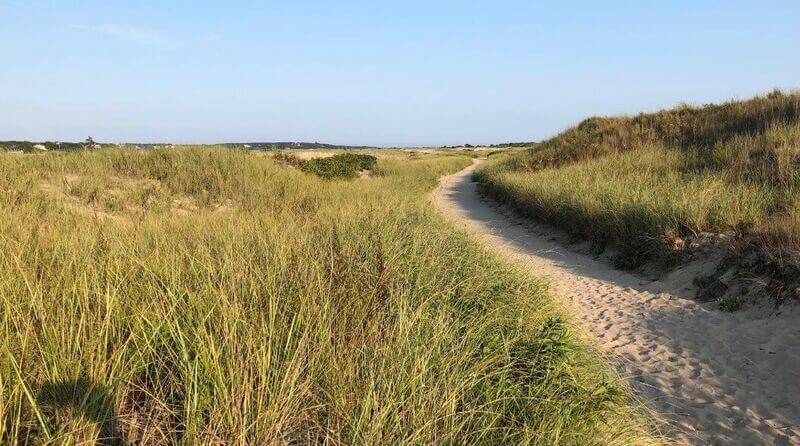
The Harding's Beach trail runs 1.8 miles from the eastern parking lot to Stage Harbor Lighthouse, the last lighthouse built on Cape Cod. The walk crosses dune grass, salt marsh edges, and tidal flats along the south-facing shore of Nantucket Sound before reaching the lighthouse at Stage Harbor's western entrance.
Most visitors complete the round trip in 50 to 80 minutes, depending on pace, wildlife stops, and time spent near the lighthouse.
The trail is free and open year-round. Stage Harbor Lighthouse is private property and is not open for unannounced public entry, but visitors can view and photograph it from the shoreline and near the front gate. This guide covers the full route from trailhead to lighthouse, with notes on tide timing, dog rules, piping plover nesting areas, wildlife, and the best times of day to walk for photography and birdwatching.
Harding's Beach Trail at a Glance
A quick summary before you plan your visit:
- Distance: 1.8 miles as a loop via AllTrails; approximately 2 miles round trip from the parking lot
- Walking time: 50 to 80 minutes, depending on pace and stops
- Difficulty: Moderate, mostly flat, but with sections of soft sand
- Surface: Packed beach sand, dune grass path, and tidal flat terrain
- Trailhead: Eastern end of Lot 2, 385 Harding's Beach Road, West Chatham
- Dogs: Not permitted May 1 through September 15
- Best tide: Low to mid-tide (the tidal flat section narrows at high tide)
- Accessibility: Accessible facilities at the main swim area; the trail to Stage Harbor Lighthouse is not wheelchair accessible
- Year-round access: The trail is free and open outside the paid parking season
For parking fees, lifeguard hours, amenities, and beach-day planning, the Chatham beaches guide covers everything you need before you arrive.
Where the Trail Starts
The Harding's Beach trail begins at the eastern end of Lot 2 at 385 Harding's Beach Road in West Chatham. From Route 28, follow Barn Hill Road south, then bear right onto Harding's Beach Road and drive to the road's end. Two parking lots sit at the terminus.
Lot 1 is adjacent to the main swim area and fills fastest on summer weekends. Lot 2 sits closest to the trailhead and fills more slowly. If the trail is your primary goal, go directly to Lot 2. From the eastern edge of that lot, the trailhead is approximately 50 yards on foot.
Restrooms and seasonal food trucks are near both lots. Use the facilities before you walk. There are none along the trail between the parking area and the lighthouse.
Step-by-Step Route to Stage Harbor Lighthouse
The Harding's Beach trail is not formally signed, but the route is well-worn and straightforward in good conditions. Here is what to expect at each segment.
Lot 2 to the Dune Path
The route begins at the eastern edge of Lot 2 and immediately enters open dune terrain. Dune grass lines both sides for most of this section. The surface here is mostly packed sand with softer patches that slow your pace in places.
Closed-toe athletic shoes or trail sneakers handle this section well. Sandals work on firm beach sand but become slower and less stable through the softer dune patches. The first quarter-mile offers clear views back toward the main swim beach and across Nantucket Sound to the south. Keep the water on your right as you head east.
Roped symbolic fencing may be present in this section from spring through late summer. These fences mark piping plovers and least tern nesting areas. Stay entirely clear of any roped zones. Do not cross the fencing for any reason, and do not approach birds that appear to be nesting.
The Salt Marsh and Tidal Flat Section
The middle portion of the Harding's Beach trail moves slightly inland and follows the edge of tidal flats and salt marsh habitat adjacent to Stage Harbor. This is the most ecologically active part of the walk. At low tide, the exposed flats reveal horseshoe crabs, feeding shorebirds, and small crustaceans visible in the shallows.
Tide conditions affect this section most directly. At high tide, portions of the path become wet and narrow. Low to mid-tide conditions produce the clearest route and the most rewarding wildlife sightings. Check the Chatham tide schedule before you arrive, particularly if you plan to combine the walk with time on the beach.
The footing through the tidal flat section requires more attention than the dune stretch. The surface alternates between firm packed sand and sections that give underfoot. Watch for horseshoe crabs at the water's edge from May through July when they come ashore to spawn. If you find one stranded upside-down in the sun, turning it right-side-up and returning it toward the water reduces the risk to the animal.
Final Approach to Stage Harbor Lighthouse
The trail ends at a viewpoint near Stage Harbor Lighthouse, approximately one mile from Lot 2. The lighthouse tower and the wood-frame keeper's house come into clear view on the final approach. The best photography angles are from the shoreline and near the front gate, looking back across the dunes toward the tower, or framing it against the sky from the south.
Do not enter the property or cross any fencing. Stage Harbor Lighthouse is private property, and the Hoyt family, who have owned and maintained the station since 1936, have kept it close to its original condition without electricity or modern plumbing. The property is not open for unannounced visits, and the owners should not be approached without a prior invitation or scheduled tour.
From this viewpoint you can see Stage Harbor, the entrance channel, and the active skeleton tower that replaced the original light in 1933. On clear days, the outline of Monomoy Island is visible to the south across the water.
The Return Walk
Most visitors return the same way they came. The reverse route offers different light conditions, particularly in the afternoon when sun angles across the dune grass from the west.
Allow roughly 25 to 40 minutes for the return to Lot 2, depending on pace. If you planned a late-afternoon walk, leave the lighthouse viewpoint with enough time to reach the parking lot before full sunset.
Stage Harbor Lighthouse: What to Know Before You Go
Stage Harbor Lighthouse has a brief operating history for a structure that carries this much architectural presence. Congress appropriated $10,000 for its construction in 1879. The 48-foot cast-iron tower and wood-frame keeper's residence were completed at a cost of $9,862.74 and first lit on July 15, 1880. A fifth-order Fresnel lens produced a fixed white light visible for 12 nautical miles.
The light guided fishing vessels through Chatham Roads, the deep-water channel at Stage Harbor's entrance, and served as a navigational complement to Chatham Light. The town's harbor took its name from fish drying racks, called "stages," that once lined the waterfront during Chatham's early fishing era.
The lighthouse operated for 53 years before decommissioning in 1933, when an automated skeleton tower replaced it. That skeleton tower remains an active aid to navigation today.
After decommissioning, the Lighthouse Board capped the original tower and sold the property. Henry Sears Hoyt purchased it in 1936. His ancestor, William Nickerson, had negotiated one of Chatham's earliest land agreements with the Monomoyick people and became one of the town's founders. The Hoyt family has maintained the station with minimal modification since then.
The Chatham Historical Society has occasionally organized limited exterior tours of Stage Harbor Lighthouse. Monomoy Island Excursions also offers boat tours that pass the lighthouse from the water side.
Check directly with both organizations for current availability. The Hoyt family sometimes opens the grounds during Cape Cod Maritime Week in May, which falls before the paid parking season at Harding's Beach begins.
For the town's other iconic lighthouse with a different history and public access during Coast Guard Auxiliary tours in summer, see the guide to Chatham Lighthouse on Shore Road.
Best Time to Walk the Harding's Beach Trail
Morning and late afternoon each offer a distinct experience on the trail.
The first two hours after sunrise give the coolest temperatures and the most active birdwatching. Ospreys, great blue herons, snowy egrets, and piping plovers are most visible during low morning tides along the salt marsh and tidal flat section. Lot 2 rarely fills before 9:00 AM on summer mornings, and the trail is quiet enough to hear bird calls across the marsh.
Late afternoon is the strongest photography window for the lighthouse. Light angles across Nantucket Sound from the west starting around 4:30 PM in summer. Stage Harbor Lighthouse appears in direct side light from approximately 5:00 PM onward.
Arriving at Lot 2 by 4:45 PM allows enough time to walk to the lighthouse and return to the beach before full sunset. For a full guide to Chatham's most photogenic locations and optimal times of day for each, the Chatham photography spots guide covers the whole town.
September and October are consistently the most rewarding months for the trail. Parking is free after Labor Day, the route is uncrowded, the light is cooler and cleaner than summer haze, and migrating shorebirds concentrate along the tidal flats in numbers that rival peak breeding season. These months deliver the best trail conditions with the least logistical friction of the year.
Tide, Weather, and When Not to Walk
The Harding's Beach trail is exposed throughout its entire length. There is no shade between the parking lot and the lighthouse viewpoint. In July and August, midday temperatures above 85 degrees Fahrenheit combined with direct sun and sand-reflected heat make the round trip uncomfortable, particularly for young children and older adults who have not eaten or hydrated before starting.
- High tide narrows the path through the tidal flat section noticeably. Walking at high tide is possible but requires more route-finding attention and results in wetter footing. Low to mid-tide provides the clearest and most stable terrain.
- Strong onshore winds off Nantucket Sound are common throughout the year, even on days that feel warm in town. A light windbreaker is useful in most seasons. In winter, exposed coastal terrain on this trail can feel significantly colder than air temperature readings suggest.
- Do not start the walk if a coastal storm warning is in effect. The tidal flat section floods quickly in strong wind-driven conditions. The route has no sheltered areas between the parking lot and the lighthouse.
Wildlife Along the Harding's Beach Trail
The habitat transitions along the Harding's Beach trail create a reliable wildlife list across all seasons. Ospreys fish over Stage Harbor throughout the summer. Great blue herons feed in the low-tide shallows along the tidal flat section. Snowy egrets work the salt marsh edges. Least terns dive offshore in summer. Piping plovers are present along the upper beach and dune base from early spring through late summer.
- Horseshoe crabs come ashore to spawn along the tidal flat zone from May through July. They are among the oldest surviving arthropod lineages, largely unchanged for approximately 450 million years, and are more closely related to arachnids than to true crabs. If you encounter one stranded on its back in the sun, returning it to the water helps it survive.
- The salt marshes adjacent to Stage Harbor connect ecologically to Monomoy Island to the south. At low tide, the tidal flat network east of the trail extends toward those waters, and shorebird concentrations can be substantial in August and September. For a deeper look at migratory bird activity in the area, the guide to bird watching at Monomoy National Wildlife Refuge covers one of the Atlantic Flyway's most significant stopover sites on the East Coast.
- According to MassWildlife's 2025 piping plover census report published in March 2026, Massachusetts recorded 1,247 breeding pairs statewide during the 2025 season, a 4.5 percent increase over the previous year's record. Approximately half of those pairs nest on Cape Cod. Harding's Beach is a documented nesting site within this population.
Parking, Fees, and the 2026 Season
Non-resident parking at Harding's Beach requires a paid pass from June 20 through August 31, 2026. Rates are $20 per day, $75 per week, or $175 for the full season. Passes are available online through the Chatham Recreation Department. Cash is accepted at gate booths at the beach. U.S. military personnel park free with a valid military picture ID.
Parking enforcement runs from 9:00 AM to 5:00 PM during the fee season. Violations carry a $50 fine. WiFi at the beach is unreliable, so purchasing passes in advance online is strongly recommended. After Labor Day, parking is free and both lots remain open year-round.
The season start date ties to the third Friday in June and shifts slightly from year to year. Verify the current year's dates on the Town of Chatham's official website before any late-June visit.
Beach Rules, Dogs, and Piping Plover Nesting Areas
Dogs are not permitted at Harding's Beach from May 1 through September 15. This rule applies to both parking lots and the full trail corridor east of the main swim area. Service animals and police K-9 animals are the only exceptions. After September 15, dogs are allowed at all hours on a leash. Owners must remove waste year-round. Glass containers are banned on all Chatham town beaches.
Piping plover nesting areas are active along the dune corridor east of the swim zone from spring through late summer. The Massachusetts Division of Fisheries and Wildlife's 2025 census confirmed that piping plovers remain federally and state-listed as threatened under the Endangered Species Act.
Roped symbolic fencing marks protected zones during the nesting season. Visitors must stay entirely clear of roped areas. Least terns share this dune and tidal flat corridor and receive the same nesting protections.
If you are visiting with a dog outside the May 1 to September 15 restriction, the dog-friendly Chatham beaches guide covers current rules for every beach in town.
Accessibility and Family Suitability
Harding's Beach has accessible parking spaces in both lots, accessible restrooms, and a beach mat extending from Lot 1 toward the waterline. The mat provides a stable rolling surface for wheelchairs and mobility devices at the main swim area.
The trail to Stage Harbor Lighthouse is a different environment. It crosses soft sand throughout, with no surface improvements, no boardwalk, and no firm footing in the tidal flat sections. Unassisted wheelchair access on the trail is not feasible. Visitors using mobility devices should plan around the accessible facilities at Lot 1 and the firm sand near the main swim area.
The trail is well-suited for families with school-age children who can manage 1.8 miles of uneven sand on their own feet. Families with toddlers in strollers should plan to turn back before the tidal flat section, where stroller use becomes impractical. Bring water and snacks for all ages; the route has no services between the parking lot and the lighthouse.
What to Bring
Closed-toe shoes or trail sneakers perform best across all sections of the Harding's Beach trail. Bring at least 16 ounces of water per person regardless of season. A hat and sunscreen are necessary for any walk longer than 20 minutes on this fully exposed route. Binoculars reward you most in the salt marsh and tidal flat section. A camera with moderate zoom captures the lighthouse tower clearly from the viewpoint.
A light windbreaker is useful even in summer. Exposed coastal terrain channels consistent wind off Nantucket Sound throughout the walk. There are no food or water sources between the parking lot and the lighthouse.
Pair This Walk With Nearby Chatham Stops
The Harding's Beach trail walk fits naturally into a longer Chatham day.
- Chatham Lighthouse stands on Shore Road approximately seven minutes by car from Harding's Beach. The overlook parking area offers the most dramatic Atlantic coast views in town. It stays accessible without summer crowds during morning hours and pairs well with a morning start at Harding's.
- Downtown Chatham is seven minutes from the beach, with galleries, restaurants, and Kate Gould Park within easy walking distance of Main Street. For families building a full day, the guide to things to do in Chatham with kids covers activities across the town by age group and weather conditions.
- If the Harding's Beach trail leaves you wanting more walking, the hiking Cape Cod guide lists trails across the Lower Cape with notes on difficulty, surface, and best season for each.
Harding's Beach is one of the few places on Cape Cod where a swim beach, a coastal wildlife trail, and a 145-year-old private lighthouse sit within the same parking lot's walking distance. Whether you are planning your first visit or returning for the photography light, for seasonal updates, current parking pass links, and visitor tips, contact the Chatham Chamber of Commerce before your trip.